Qualitative Examples
Mel spectrogram of the full original audio. Blue bands are gold evidence; green ticks are AudioHelix's retrieved 5 s units.
Play the audio or click the spectrogram to seek.
video300
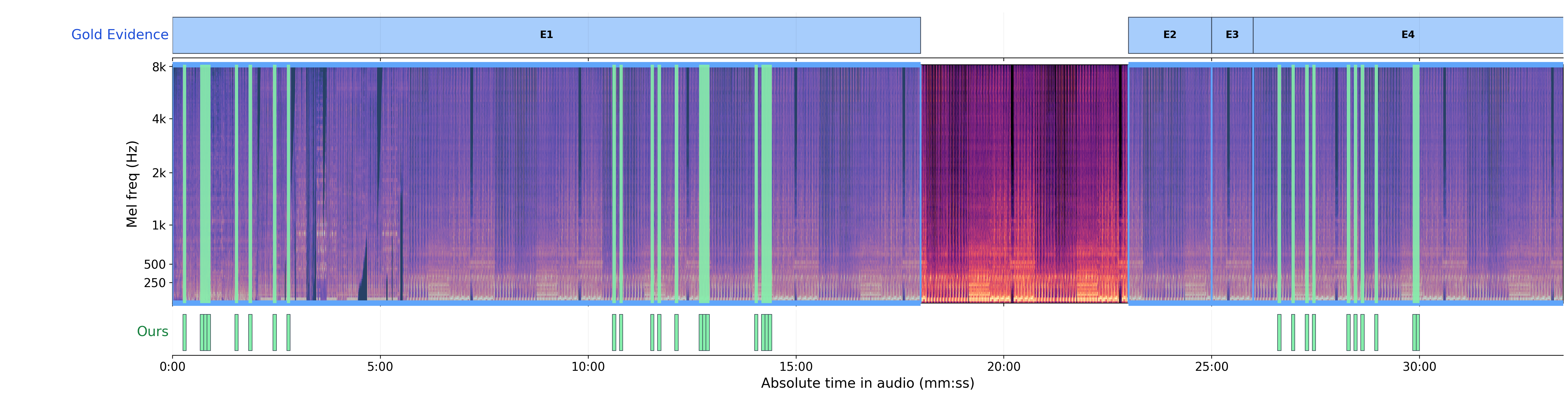
As the performance shifts from the large male dancer group to the solo unicyclist and then into the later mixed unicycle/dancer rope and pyramid segments, how does the background music behave across these transitions?
video339
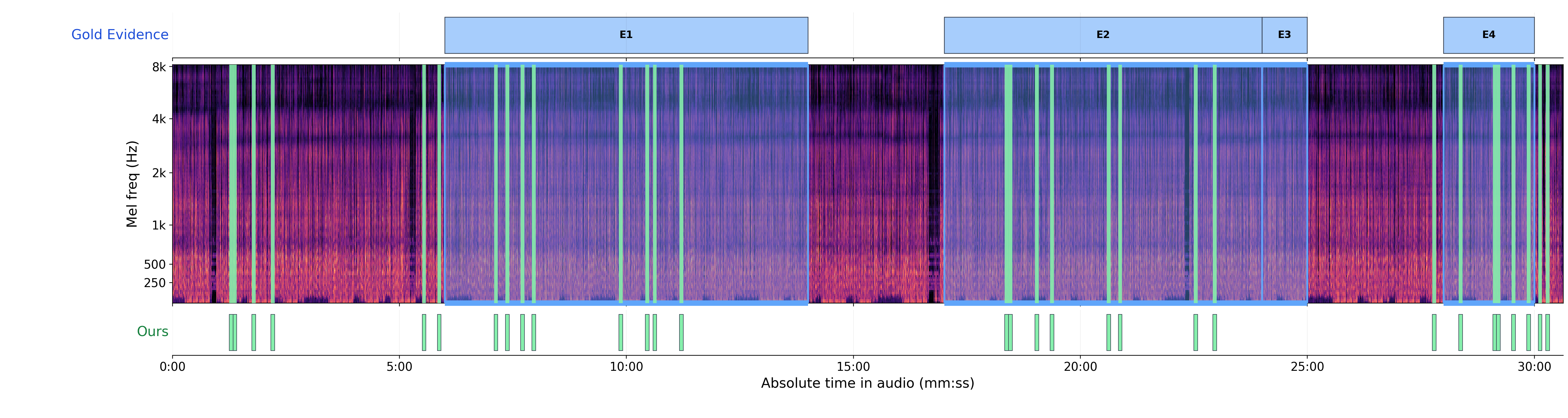
According to the narrator, how did Miuccia Prada’s early use of nylon eventually lead to the Linea Rossa/Prada Sport concept, and how was that line later positioned within Prada’s collections and strategy?
video364
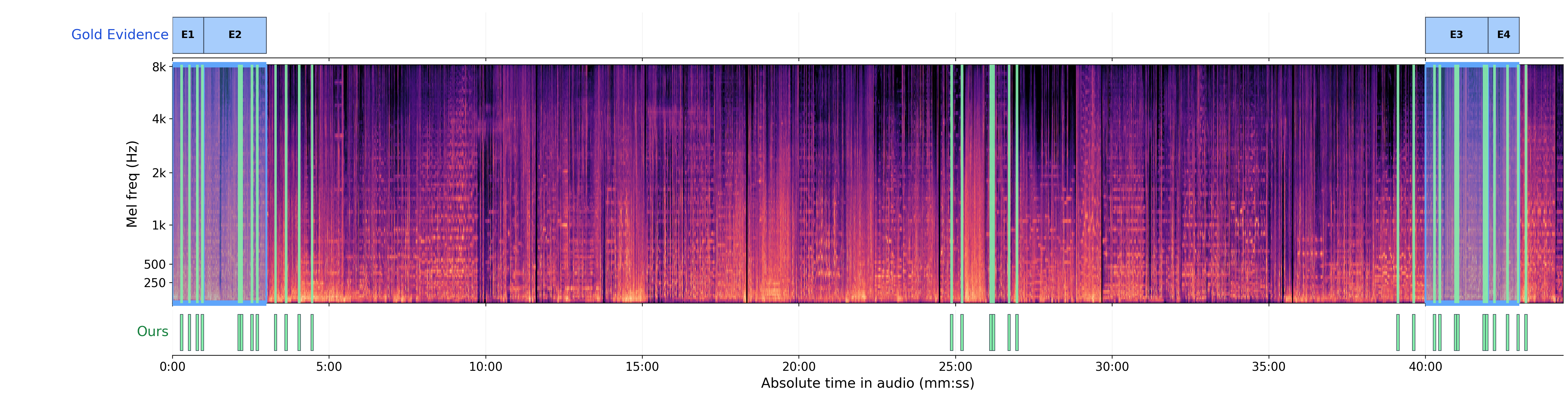
According to the narration, what combination of reasons explains why humpback whales make their annual trip between Hawaii and Alaska, and what special ability helps them stay connected during that long journey?